
blog
Shivaji and His Times: Book Review
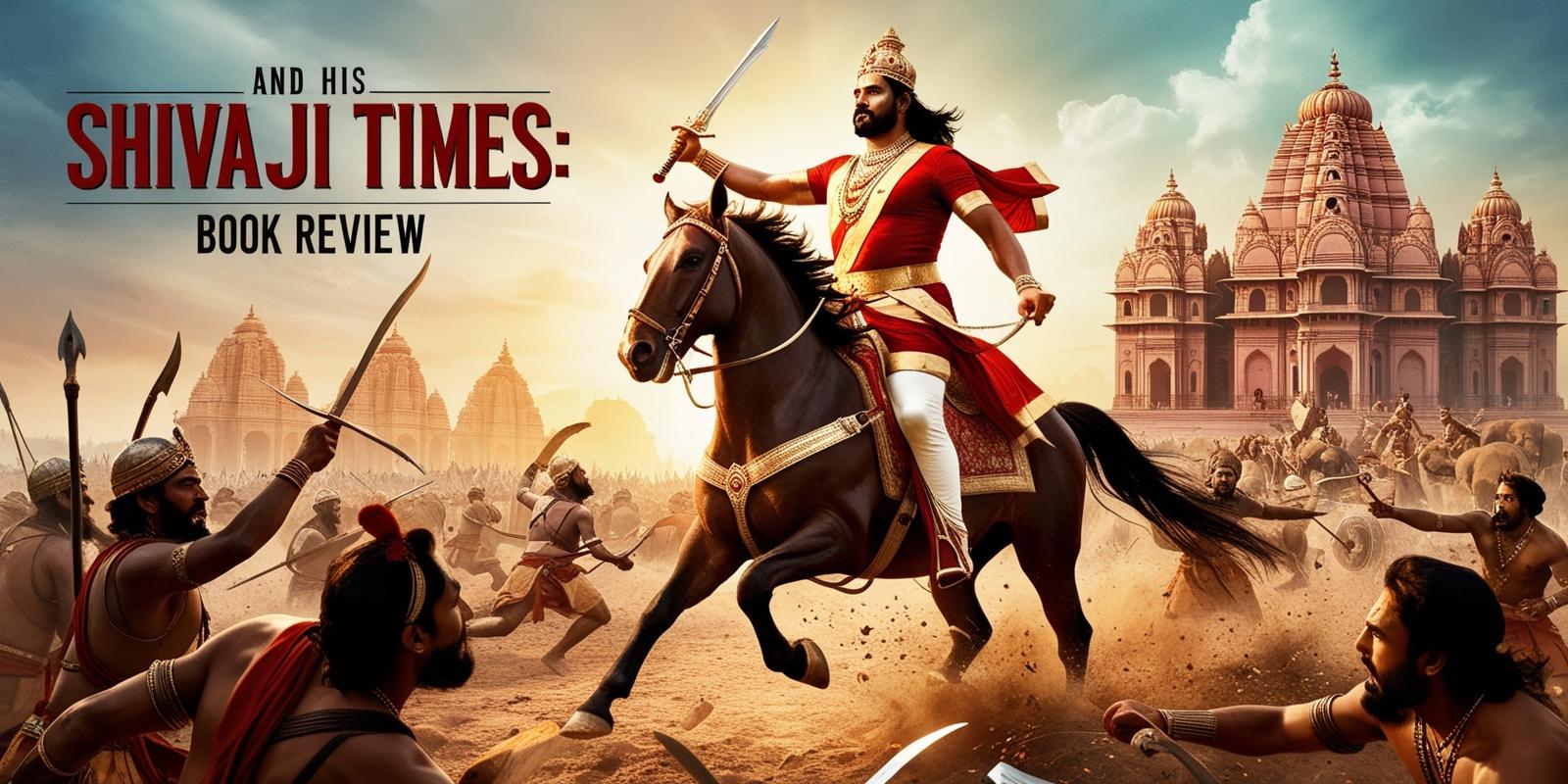
After reading this book, I am in total awe and utter amazement thinking about this man we all know as Chatrapati Shivaji. I would like to salute this giant among Hindus a million times and even that wouldn’t be enough to express the respect and gratitude I feel towards this man.
For he showed us that it was possible to re-establish Hindu Swaraj and reclaim this sacred land we all know as भारतः(Bharath). While his own personal life was cut short due to illness1, I wonder how history would have changed course had he lived a longer life.
Shivaji was the greatest Hindu king that India had produced within the last thousand years; one who was the very incarnation of lord Siva, about whom prophecies were given out long before he was born; and his advent was eagerly expected by all the great souls and saints of Maharashtra as the deliverer of the Hindus from the hands of the Mlecchas, and as one who succeeded in the reestablishment of Dharma which had been trampled underfoot by the depredations of the devastating hordes of the Moghals
-- Swami Vivekananda
The Book
Quite honestly, it’s a shame that such a wonderfully researched book has almost disappeared and allowed to be forgotten. I was fortunate enough to know about this book due to mentions on Twitter as well as thankful 🙏 to archive.org for uploading a scanned version of this book.
As Sarkar mentions in this book, he has worked with different sources including official Persian letters exchanged by Mughals, Bijapur Shah as well as British sources. Note that this book is not a monologue about the life of Shivaji and Sarkar explains why:
The Marathas were only one among the many threads in the tangled web of Deccan history in the 17th century. Therefore to understand the true causes and full consequences of Shivaji’s own acts and policy, it is necessary to have a detailed knowledge of the internal affairs of the Mughal empire, Bijapur and Golkonda also.
Initial years of Shivaji
In the beginning sections of the book, we get to know about Shivaji’s early years, his constant fights with the Mughals and finally his becoming Chatrapathi.
Shivaji’s youth and his surroundings
The author starts with introducing the audience to the environment and the land Shivaji grew up in. This helps us understand what moulded Shivaji into the great king who eventually challenged the barbaric Mughals. Abandoned by his father at a very early age, he was brought up completely by his devout Hindu mother who inspired him with stories from Hindu epics such as Mahabharata and Ramayana. Besides having a martial background (thanks to his father who was under the service of Bijapur Shahs), the hostile land challenged the young boy making him resolute and strong enough to take on challenges.
Later on we see how Shivaji captured a number of forts and took hold of lands near Pune. We also learn about his first war with the Mughals and attempts at peacemaking with Aurangzeb.
Afzal Khan
One of the most widely talked about events in Shivaji’s life is his victory over Afzal Khan, a general under the Bijapur government sent to bring Shivaji under control. Initially, Shivaji was invited by Afzal Khan to discuss terms through a Hindu priest (Krishnaji Bhaskar Kulkarni). Learning that Afzal had nefarious intentions, Shivaji wore arms under his clothes (including a tiger claw later used to disembowel Afzal) and a metal plate under his turban (which indeed saved him) and met Afzal Khan accompanied by two bodyguards.
Leaving his bodyguards, Shivaji enters Afzal’s tent. Afzal, attempting to fool Shivaji, gives him a friendly embrace. It is said that Afzal is almost 7 feet tall and physically strong while Shivaji was a comparatively short and thin man. Sounds almost like David meets Goliath, doesn’t it? Any guesses as to who won the encounter?
Afzal, taking advantage of his brute physical strength, tried to suffocate Shivaji by tightening his left arm grip. Shivaji almost lost consciousness but somehow regained his strength when he chanted his guru’s name. He disemboweled Afzal using the tiger claws, fatally injuring him in the process. Shivaji ran out of the tent but narrowly escaped a fatal blow from one of Afzal’s bodyguards (Sayyid Banda). Later, Afzal’s entire army was routed by Shivaji’s army, thus marking the rise of this great emperor.
Jai Singh and visit to Aurangzeb
Next we read about Jai Singh, one of Aurangzeb’s trusted generals who was sent to the Deccan to subdue Shivaji. A clever and well-tempered person, he formed alliances with the local enemies and almost brought down Shivaji’s main fort Purandar. Finally, Shivaji relented and signed the treaty of Purandar.
Treaty of Purandar
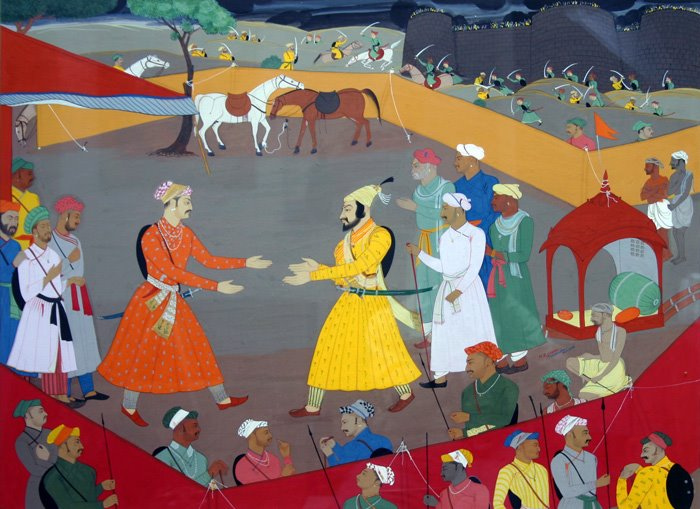
Under this treaty, the Marathas surrendered a number of forts to the Mughals as well as agreed to serve under Aurangzeb. With the personal assurances of Jai Singh, Shivaji along with his son Sambhaji was sent to the Mughal court to meet the emperor, Aurangzeb. Things did not go as expected; Shivaji did not like the way he was treated in the court and, feigning illness, retired to his quarters along with his supporters. Later, he along with his folks was placed under arrest.
Another well-known story throughout India: Shivaji and his son escaped by concealing themselves in small baskets. Disguising themselves as saints, they managed to get back home and the hostilities against the Mughals renewed. We later learn of Shivaji renewing his peace agreement with the Mughals and later his victories against the Mughals. He also sacked Surat, one of the richest ports in India back then. The British factories were left untouched by the Marathas (Sarkar describes that the British held out on their own while the rest of the traders ran away).
There was constant friction between some of the generals (Dilir Khan) sent by Aurangzeb himself and Prince Muazzam. Once even Shivaji was invited by Prince Muazzam to apprehend Dilir Khan who ran to safety! Shivaji in the meantime looted Surat for the second time, sealing the fate of the port forever. Fearing future raids, most of the traders moved to safer ports, thereby abandoning one of the richest ports in the west.
Coronation of Shivaji
We learn about the lavish ceremony crowning Shivaji as Chatrapathi. Sarkar believes that Marathas aren’t originally Kshatriyas, but Shivaji was declared as one by a Brahmin named Gaga Bhatta. A huge amount of money was spent on this event, and finally the Marathas had an emperor of their own. Unfortunately, Shivaji’s mother died only 10 days later, which most people considered a bad omen2. In the final sections of chapter IX, we get to know about his raids into neighboring counties as well as those of Mughal camps.
Wars and events after his coronation
In the middle section of the book, Sarkar describes his naval strength, constant tussle with the Siddis and his invasion of Karnatak.
Shivaji’s navy
Shivaji early on realized the importance of naval strength. We get to learn more about Shivaji’s navy and the different types of boats employed in service. Shivaji, being a true Hindu, recruited the strongest and most experienced folks into his navy without regard to religion, including Misri and Daulat Khan (Siddis). Besides controlling trade, the navy was also used to plunder and raid enemy territories.
Unfortunately for the Marathas, the Abyssinians (who are Muslims of African descent) had settled in Janjira in the early 16th century.
Neither Shivaji nor any of his future Marathas are completely able to take over Janjira. The book talks about constant war between the two parties ending in stalemates. Abyssinians also take support of Mughals to counter Marathas.
Khanderi
Unable to conquer Janjira, Shivaji directed his men to build a fort in Khanderi which is a small island near Mumbai. However, the British felt that this threatened their Bombay port, pushing them into a confrontation with the Marathas. Unable to defeat them, the British made peace with Shivaji later on.
Invasion of Karnataka
As Sarkar describes in his book, after the coronation of Shivaji, the treasury was running low and Shivaji needed to replenish it. So he started focusing on the south, especially Karnataka and Tanjore, which was ruled by his half-brother Vyankoji. One disgruntled minister, Raghunath, met Shivaji and invited him to invade the south.
Raghunath was also instrumental in Shivaji forming an alliance with Golkonda’s wazir Abdul Hassan Qutb Shah who was initially apprehensive of meeting Shivaji due to the latter’s reputation as the killer of Afzal Khan. After the formalities, Shivaji marched on and visited Srisailam on a pilgrimage.
Deeply influenced by the purity of this place, Shivaji, under religious frenzy, attempted to cut off his own head! As Sarkar mentions, one can understand how much Shivaji was a devoted Hindu:
Shivaji ascended this difficult plateau, bathed in the Krishna and spent some ten days at Shri Shaila doing religious rites. The quiet and secluded beauty of the scenery and the spiritual atmosphere of the place penetrated his soul, and he believed that he would find no purer spot to die in. So he attempted to cut off his own head before the goddess; but his ministers restrained his religious frenzy and recalled him to a sense of his duty to his subjects and the Hindu world at large.
Conquest of Gingee and Vellore
Through some clever negotiations, Shivaji acquired Gingee Fort without a fight3. He later fought with Sher Khan Lodi and, after a long siege, acquired Vellore Fort.
Tanjore
Finally Shivaji met his half-brother Vyankoji where they tussled over the inheritance left by their father Shahji. Vyankoji disagreed and quietly ran away during the night. Deciding not to invade Tanjore, Shivaji proceeded to conquer Bangalore and other places in Mysore. Vyankoji in the meantime tried to drive away the Marathas by attacking the Vellore fort which was under the control of Shantaji (another half-brother of Shivaji). However, Vyankoji’s forces were defeated and he finally settled for peace with the Marathas.
Final years
Shivaji died as a troubled man during his final years. Besides constant tussle with Bijapur and the Mughals, he faced some setbacks including his son’s desertion to the Mughals and domestic trouble.
Shambuji
Sarkar does not have kind words to describe Shambuji. Shambuji was placed under arrest in Panhala fort due to his addiction to sensual pleasures. Unfortunately, he later deserted to the Mughal side4 under Dilir Khan. Quoting the book:
Dilir Khan was thrown into transports of joy at the desertion of Shivaji’s heir to his side. “He felt as happy as if he had conquered the whole Deccan!” He beat his drums in joy and sent a report to the Emperor.
Bijapur grew weaker due to internal tussle between various sections (Afghans etc.). Upon Bijapur’s request, Shivaji defended it against Mughal invasion under Dilir Khan. It is interesting to know that Shambuji defected back to the Marathas after having a disagreement with Dilir Khan over his mistreatment of Hindus. His heart always bled for Hindus5.
Death
Shivaji died of fever and dysentery on March 24, 1680. Following his death, there was a major struggle between his younger son Rajaram and Shambuji, the latter prevailing to become the next Chatrapathi of the Marathas. The final chapters of this book describe his government, institutions and policies.
References
- Shivaji and His Times - Archive.org - Full scanned copy of the book
- Jadunath Sarkar - Wikipedia - About the author and historian
- Chhatrapati Shivaji Maharaj - Wikipedia biography of Shivaji
- Maratha Empire - History of the Maratha Empire
- Treaty of Purandar (1665) - Historical context of the treaty
- Gingee Fort - One of the forts conquored by Shivaji
- Vellore Fort - Historical fort in Tamil Nadu
Or treachery depends on whom you ask. ↩︎
I believe that Shivaji’s mother, sensing her days were coming to an end and wanting to see her son crowned as Chatrapathi, probably pushed him to do so. ↩︎
This fort was used by Chhatrapati Rajaram during the tough time when Marathas were decimated by Mughals. ↩︎
He later returned to the Maratha side only to be re-imprisoned in Panhala. ↩︎
Shambuji was later tortured and killed by Aurangazib for refusing to convert to Islam. ↩︎